5 Conventional Deadlift Cues to Instantly Improve Your Deadlift Form
.The conventional deadlift is one of the best exercises for building total-body strength, stronger hamstrings, powerful glutes, and a thicker back. But if your deadlift form is off, you’ll lose power, waste energy, and increase your risk of injury. A strong conventional deadlift is not about jerking the weight off the floor. It’s about leverage, positioning, bar path, and proper deadlift technique. If you want to improve your deadlift, pull heavier weight, and build better mechanics, these 5 conventional deadlift cues will help you fix your deadlift form and become a stronger puller.
Ronnell "Kilo Nellz" Leftwich
5/8/20263 min read
1. Keep Your Arms Long During the Deadlift
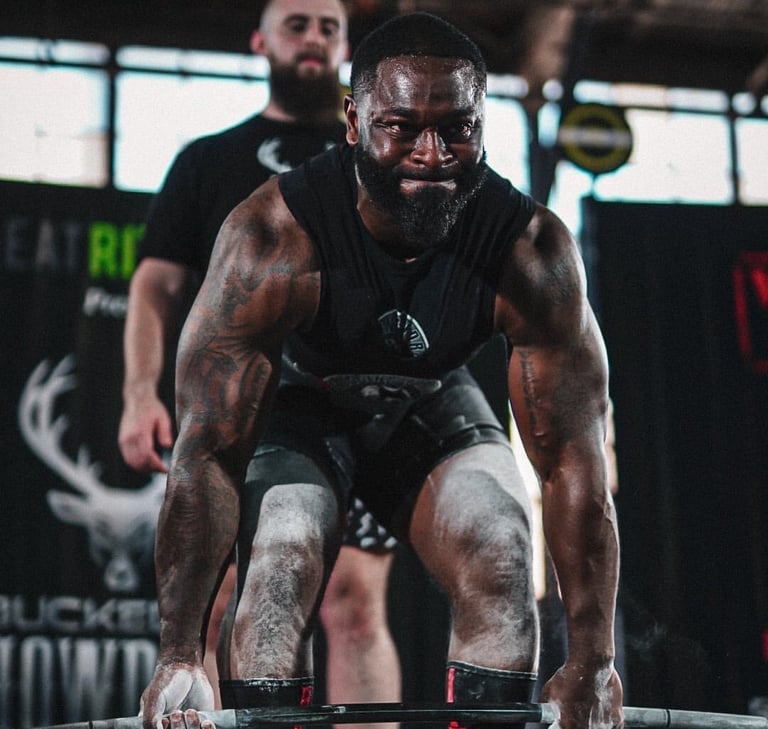
One of the biggest mistakes lifters make during the conventional deadlift is shrugging the weight or pulling with their traps.
Your arms are not supposed to lift the barbell. Your hands are only there to hold the weight.
When setting up for the deadlift, let the barbell pull your arms long naturally. Relax your shoulders and avoid shrugging the weight upward.
If you shrug heavy deadlifts, gravity is eventually going to force that weight back down. That creates instability, wastes energy, and can throw off your deadlift mechanics.
Instead:
Keep the shoulders relaxed
Let the arms hang long
Focus on pushing through the floor
Allow your lower body to drive the lift
Long arms improve deadlift leverage, keep the bar path cleaner, and help you lock out heavier weight more efficiently.
2. Keep Your Head, Neck, and Spine Neutral
A neutral spine is one of the most important parts of proper deadlift form.
When you’re at the bottom of the conventional deadlift, your eyes should naturally look down. As you stand up with the barbell, your eyes rise with your torso.
Your head, neck, and back should move together as one unit.
One of the biggest deadlift mistakes is throwing the head up too early. When lifters crank their head upward from the floor, their knees usually shift forward over the barbell.
That creates:
A worse deadlift bar path
Poor leverage
More wasted energy
Less efficient deadlift mechanics
Think of the conventional deadlift like a lever system. Keeping your spine neutral creates a smoother and stronger pull from the floor to lockout.
3. Don’t Squat Your Conventional Deadlift
The conventional deadlift is a hip hinge movement — not a squat.
A lot of lifters drop their hips too low and try to squat the weight up. This causes the knees to move forward and forces the barbell to travel around the legs instead of moving vertically.
For a stronger deadlift:
Sit back into the pull
Load the hamstrings
Keep tension in the glutes
Allow the hips to do the work
Leaning back into the deadlift helps engage the posterior chain and creates better leverage off the floor.
When your hips are positioned correctly, the deadlift becomes smoother, stronger, and more efficient.
4. Keep the Deadlift Bar Path Consistent
A strong deadlift has an efficient bar path.
If the bar swings away from your body, loops around your knees, or drifts forward, you’re losing strength and making the lift harder than it needs to be.
The goal of proper deadlift technique is to keep the bar traveling in the same path every single rep.
A clean deadlift bar path starts with:
Long relaxed arms
Neutral head position
Proper hip placement
Knees staying out of the way
Strong lat and core stability
The straighter the bar path, the more efficient your deadlift becomes.
Efficient lifters waste less energy and pull heavier weight.
5. Squeeze Your Glutes to Lock Out the Deadlift
Once the barbell reaches knee level, the glutes and hamstrings should take over the lift.
As you finish the deadlift:
Drive the hips through
Keep the arms long
Squeeze the glutes hard at the top
Do not overextend your lower back trying to lock out the weight.
A powerful deadlift lockout comes from strong hip extension, not leaning backward.
One simple cue is to squeeze your glutes like you’re trying to hold in a fart. That cue helps activate the glutes naturally and teaches proper deadlift lockout mechanics.
Strong glute activation improves:
Deadlift lockout strength
Hip power
Posterior chain development
Overall pulling performance
Final Thoughts on Conventional Deadlift Form
If you want a bigger conventional deadlift, better deadlift technique, and more consistent strength gains, focus on mastering the fundamentals.
Keep your arms long.
Keep your spine neutral.
Sit back into the deadlift.
Keep the bar path clean.
Lock the weight out with your glutes.
The stronger your mechanics become, the stronger your deadlift becomes.
Whether your goal is powerlifting, building muscle, increasing strength, or improving athletic performance, mastering proper conventional deadlift form will help you pull bigger weight safely and efficiently.
BUILD YOUR DEADLIFT UP NOW! https://payhip.com/b/8oiAF