
The Power of Visualization
When most people hear the word visualization, they immediately think about sitting quietly and imagining success. They picture an athlete closing their eyes before a competition and seeing themselves win. While that is certainly part of visualization, I believe it goes much deeper than that. Visualization is not just seeing yourself succeed. Visualization is preparing yourself to succeed. One thing I have learned through years of strength training and powerlifting is that the mind is incredibly powerful. Most of the time, the thoughts we repeatedly tell ourselves become our reality. If you constantly tell yourself that you’re going to fail, you’re probably going to find a way to fail. If you constantly tell yourself that you’re capable, strong, and prepared, you’ll usually find a way to rise to the occasion. The mind is always listening. The body often follows where the mind leads.
Ronnell "Kilo Nellz" Leftwich
6/2/20263 min read
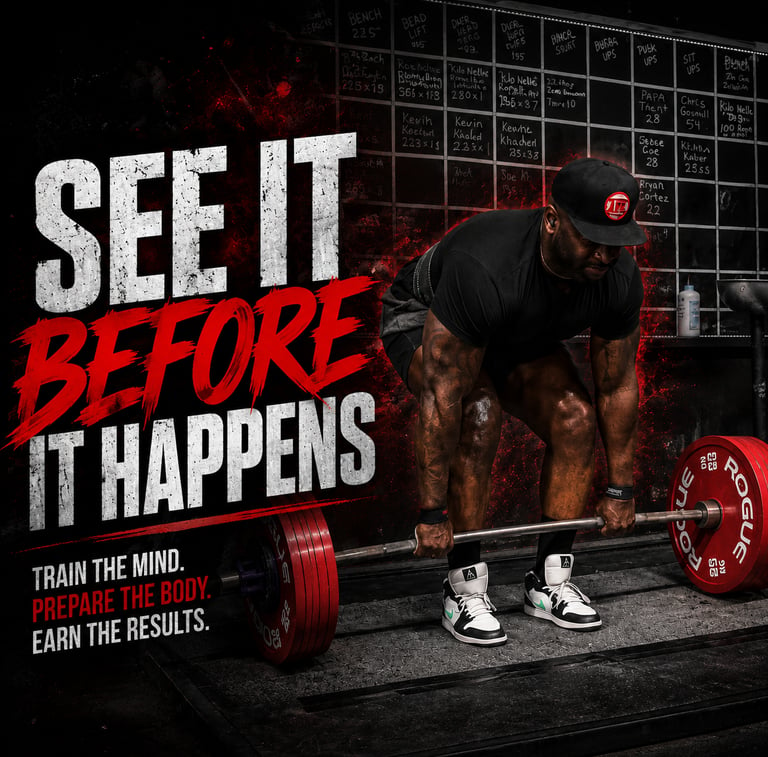
The Power of Visualization: Training Your Mind Before You Train Your Body
When most people hear the word visualization, they immediately think about sitting quietly and imagining success. They picture an athlete closing their eyes before a competition and seeing themselves win. While that is certainly part of visualization, I believe it goes much deeper than that.
Visualization is not just seeing yourself succeed.
Visualization is preparing yourself to succeed.
One thing I have learned through years of strength training and powerlifting is that the mind is incredibly powerful. Most of the time, the thoughts we repeatedly tell ourselves become our reality. If you constantly tell yourself that you’re going to fail, you’re probably going to find a way to fail. If you constantly tell yourself that you’re capable, strong, and prepared, you’ll usually find a way to rise to the occasion.
The mind is always listening.
The body often follows where the mind leads.
Visualization Starts Long Before the Lift
Many people think visualization begins when you walk into the gym.
I disagree.
For me, visualization starts much earlier in the day.
If I know I have a big squat session later, I’m already mentally preparing for it hours before I touch the barbell.
I’m hydrating throughout the day because I know performance matters.
I’m paying attention to my recovery.
I’m making sure I’m eating properly.
I’m moving around and staying loose.
I’m working on mobility.
Every action is supporting the vision of what I want to accomplish later.
That’s the part many people miss.
Visualization isn’t simply imagining success while doing nothing to prepare for it.
Visualization should be paired with action.
If you’re visualizing a big squat but skipping your mobility work, neglecting hydration, and rushing into the gym unprepared, you’re not fully committed to the vision.
Your actions should match your thoughts.
Rehearsing Success
As the workout gets closer, I begin mentally rehearsing the movement.
I can see myself walking up to the bar.
I can feel my hands grabbing the knurling.
I can feel the weight sitting on my back.
I can see myself bracing my core.
I can feel my feet driving into the floor.
I can see the squat before it ever happens.
When I finally step under the bar, it doesn’t feel unfamiliar.
I’ve already been there mentally.
I’ve already completed the lift hundreds of times inside my head.
That’s one of the reasons visualization can be so powerful. It creates familiarity.
The brain begins to recognize the movement and the situation.
Instead of approaching the lift with fear and uncertainty, you’re approaching it with confidence because you’ve already experienced success mentally.
The Difference Between Visualization and Fantasy
There is an important distinction that needs to be made.
Visualization is not fantasy.
Fantasy is wishing.
Visualization is preparation.
Anybody can sit around and imagine themselves becoming stronger.
Anybody can imagine winning.
Anybody can imagine success.
The difference is that visualization should motivate action.
When you truly believe something is possible, your behavior starts to change.
You begin making better decisions.
You become more disciplined.
You become more intentional.
You start moving like the person you’re trying to become.
That’s where the real power exists.
The Mind and Body Connection
Strength sports teach us that physical ability and mental ability are connected.
A strong body with a weak mindset can crumble under pressure.
A strong mindset can help push the body beyond what most people believe is possible.
This doesn’t mean you can think your way into an 800-pound squat overnight.
But it does mean that your thoughts influence your preparation, your confidence, your execution, and your willingness to keep going when things get difficult.
Every great lift starts in the mind before it happens on the platform.
Final Thoughts
Visualization is more than simply seeing success.
It’s preparing for success.
It’s matching your actions to your goals.
It’s hydrating because you know performance matters.
It’s working on mobility because you know movement quality matters.
It’s mentally rehearsing the lift before you touch the bar.
It’s becoming the person capable of accomplishing the goal before the goal arrives.
The next time you have a big training session, don’t just think about the lift.
Prepare for it.
Visualize it.
Move like it’s already going to happen.
Then go earn it.
Because visualization without action is just a dream.
Visualization combined with preparation can become reality.