Vegan Protein Powder vs Whey Protein Powder
Walk into any supplement store and you’ll see shelves packed with protein powders. For years, whey protein has dominated the industry and has been considered the gold standard for building muscle. But over the last decade, vegan protein powders have improved tremendously, and for many people, they may actually be the better choice. Now before anybody grabs their pitchforks, I’m not saying whey protein doesn’t work. It absolutely does. But when you look at digestion, ingredient quality, stomach comfort, and overall health, vegan protein powder has some advantages that shouldn’t be ignored. Let’s break it down.
Ronnell "KiloNellz" Leftwich
5/25/20263 min read
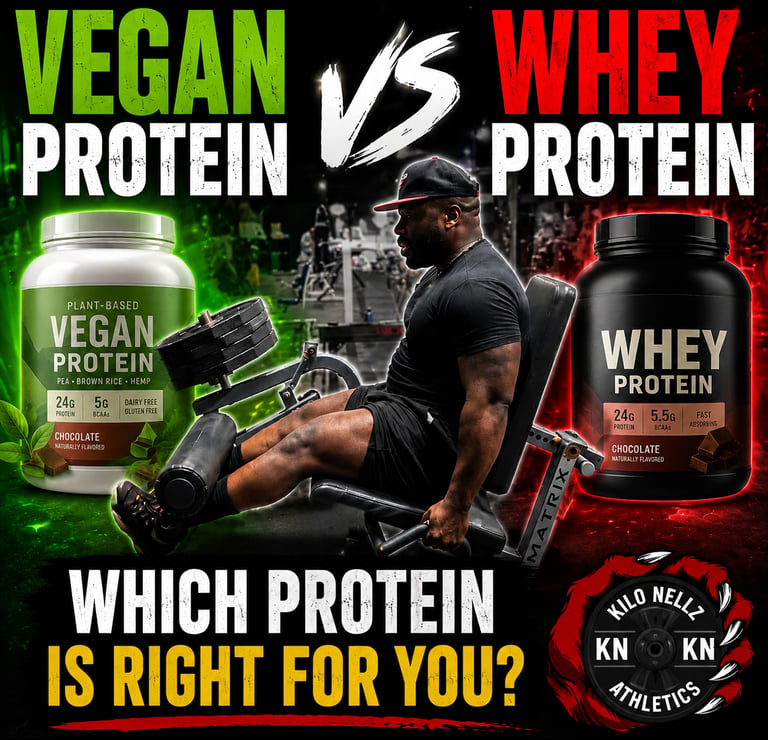
Vegan Protein Powder vs Whey Protein Powder: Why I Recommend Vegan Protein
Walk into any supplement store and you’ll see shelves packed with protein powders. For years, whey protein has dominated the industry and has been considered the gold standard for building muscle. But over the last decade, vegan protein powders have improved tremendously, and for many people, they may actually be the better choice.
Now before anybody grabs their pitchforks, I’m not saying whey protein doesn’t work. It absolutely does. But when you look at digestion, ingredient quality, stomach comfort, and overall health, vegan protein powder has some advantages that shouldn’t be ignored.
Let’s break it down.
What Is Whey Protein Powder?
Whey protein is derived from milk during the cheese-making process. It’s one of the fastest-digesting proteins available and contains all nine essential amino acids needed for muscle growth and recovery.
The three most common forms are:
Whey Concentrate
Whey Isolate
Whey Hydrolysate
Whey has built its reputation on helping athletes gain muscle, recover faster, and increase strength.
What Is Vegan Protein Powder?
Vegan protein powder is made entirely from plant-based ingredients. Most modern formulas use a blend of protein sources to create a complete amino acid profile similar to whey.
Common ingredients include:
Pea Protein
Brown Rice Protein
Pumpkin Seed Protein
Hemp Protein
Sunflower Protein
Today’s vegan protein powders are far different than they were ten years ago. Most quality brands now contain enough essential amino acids to support muscle growth, strength gains, and recovery.
Muscle Building: Is Whey Better?
This is usually the first question people ask.
On paper, whey protein has a slight advantage because it naturally contains more leucine, one of the primary amino acids responsible for stimulating muscle protein synthesis.
However, when total daily protein intake is adequate, research continues to show that high-quality vegan protein powders can support muscle growth and recovery very effectively.
For the average gym-goer trying to build muscle, get stronger, or lose fat, the difference is much smaller than supplement companies would have you believe.
Training hard and hitting your daily protein goal matters far more than whether your protein came from whey or plants.
Digestion: The Biggest Advantage of Vegan Protein
This is where vegan protein powder shines.
Many people experience:
Bloating
Gas
Stomach discomfort
Digestive issues
Feeling heavy after shakes
These problems often come from dairy sensitivity or difficulty digesting lactose.
Even whey isolate, which contains less lactose than concentrate, can still cause issues for some people.
Many people switch to vegan protein and immediately notice:
Less bloating
Better digestion
Improved stomach comfort
Less post-shake sluggishness
If you’ve ever felt like your protein shake was sitting in your stomach like a brick, this is worth paying attention to.
Ingredient Quality
A lot of whey protein powders contain:
Artificial sweeteners
Fillers
Thickeners
Dairy ingredients
While some vegan powders contain these ingredients as well, many plant-based companies focus heavily on cleaner labels and simpler ingredient lists.
Not all vegan protein powders are clean, but many of the best brands place a strong emphasis on ingredient quality.
Recovery and Inflammation
Everyone responds differently, but many athletes report feeling better overall when switching to vegan protein powders.
Less digestive stress often means:
Better recovery
Better energy levels
Less stomach irritation
More comfortable daily nutrition
When your digestive system isn’t constantly fighting irritation, your body can focus more energy on recovery and performance.
Pros and Cons of Whey Protein
Pros
Complete protein source
High leucine content
Fast digestion
Excellent for muscle growth
Widely available
Cons
Dairy-based
Can cause bloating
May upset the stomach
Not ideal for lactose-intolerant individuals
Often contains artificial ingredients
Pros and Cons of Vegan Protein Powder
Pros
Easier digestion for many people
No dairy
Less bloating
Great option for sensitive stomachs
Often contains additional nutrients and fiber
Environmentally friendly
Cons
Can be more expensive
Texture can be thicker
Some brands have an earthy taste
Quality varies significantly between companies
Why I Recommend Vegan Protein Powder
As someone who spends a lot of time in the gym and around athletes, I think most people underestimate how much digestion impacts performance.
If you’re drinking protein shakes every day and constantly dealing with bloating, gas, or stomach discomfort, your supplement may be causing more problems than you realize.
A quality vegan protein powder can provide the protein you need while helping you avoid many of the digestive issues associated with dairy-based products.
You don’t have to be vegan to benefit from vegan protein.
In fact, many people who eat meat every day still choose vegan protein powder simply because it makes them feel better.
Final Thoughts
Protein powder should make your life easier, not harder.
Whey protein remains a great option and has earned its reputation over the years. But if you’re looking for better digestion, less bloating, and a cleaner alternative that can still support muscle growth and recovery, vegan protein powder deserves serious consideration.
You don’t need to become vegan. You don’t need to change your entire diet.
Sometimes a simple switch in your protein powder is enough to improve how you feel, recover, and perform in the gym.
For many people, that’s a change worth making.