Why You Should Train Your Back 3 Times Per Week
When most people think about building an impressive physique, they immediately think about the chest, arms, or abs. But if you want to become stronger, look more athletic, and build a body that performs as well as it looks, your back deserves far more attention. Training your back three times per week can dramatically improve your strength, physique, posture, and overall athletic performance. Here’s why.
Ronnell "Kilo Nellz" Leftwich
6/26/20262 min read
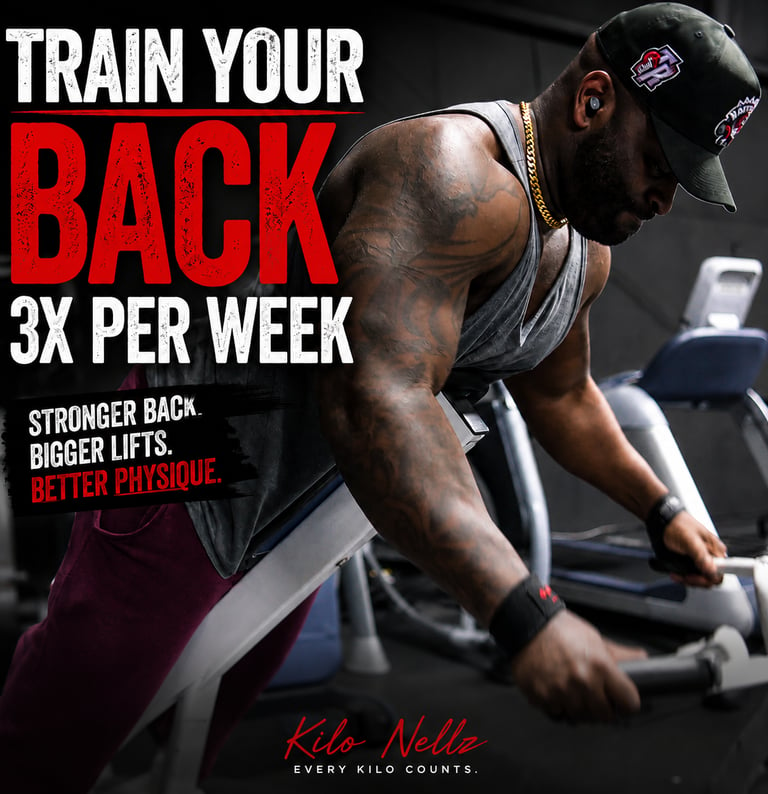
1. Your Back Is Involved in Every Major Lift
A strong back is the foundation of strength.
Whether you’re trying to improve your:
Squat
Bench Press
Deadlift
Overhead Press
Olympic Lifts
your back is working.
During the squat, your upper back keeps your torso rigid and prevents you from folding over.
During the bench press, your lats create stability, improve bar control, and provide a solid platform to press from.
During the deadlift, your entire posterior chain works together to keep the spine neutral while producing maximum force.
Even exercises that don’t directly target the back still rely on it for stability and force production.
Simply put, a stronger back makes every lift stronger.
2. A Bigger Back Creates a Bigger Physique
Nothing changes your physique quite like adding muscle to your back.
Your back is one of the largest muscle groups in the human body. Developing it creates:
A wider V-taper
More upper-body thickness
Better posture
A more powerful appearance from every angle
Many people spend years chasing bigger arms while neglecting their back.
Ironically, building a larger back often makes your waist appear smaller, creating a more aesthetic physique without losing body weight.
3. Pulling Movements Help Build Bigger Biceps
Every rowing movement and pull-down recruits the biceps.
While curls isolate the arms, compound pulling exercises allow the biceps to work alongside much larger muscle groups under heavy loads.
Exercises like:
Pull-ups
Lat Pulldowns
Chest-Supported Rows
Cable Rows
Machine Rows
all provide tremendous biceps stimulation.
If your goal is bigger arms, don’t overlook your back workouts.
4. More Muscle Means Greater Calorie Demand
Your back contains a tremendous amount of muscle mass.
The more lean muscle you build, the more energy your body requires to maintain it. That means your body burns more calories throughout the day compared to having less muscle.
Building muscle alone isn’t a magic solution for fat loss—you still need appropriate nutrition and an overall calorie balance—but increasing lean muscle mass can contribute to a higher daily energy expenditure.
Training one of the body’s largest muscle groups consistently is an excellent investment for both body composition and long-term health.
5. Better Posture and Injury Prevention
Modern life keeps many of us sitting, driving, or looking down at screens for hours every day.
Strong back muscles help:
Pull the shoulders back
Improve posture
Support the spine
Reduce muscular imbalances
Increase shoulder stability
Balanced development between your pushing and pulling muscles can also help reduce overuse issues that often occur when people train chest far more than back.
6. More Training Frequency Means More Opportunities to Improve
Many lifters only train their back once per week.
Instead of trying to cram every exercise into one marathon session, spreading your volume across three weekly workouts allows you to:
Practice movements more often
Improve technique
Recover between sessions
Build quality training volume
Stimulate muscle growth multiple times each week
You don’t need to destroy your back every workout.
Focus on quality work, good form, and gradually increasing your performance over time.
Sample Weekly Split
Day 1 – Width Focus
Pull-Ups or Lat Pulldowns
Straight-Arm Pulldowns
Single-Arm Lat Pulldown
Day 2 – Thickness Focus
Chest-Supported Rows
Machine Rows
Cable Rows
Day 3 – Strength & Stability
Barbell Rows or T-Bar Rows
Rear Delts
Face Pulls
Back Extensions
This approach develops every portion of the back while supporting recovery and continued progress.
Final Thoughts
If you’re serious about building strength, adding muscle, and improving your physique, stop treating your back as an afterthought.
A stronger back carries over to every major lift, helps build bigger biceps through heavy pulling movements, improves posture, and develops one of the largest muscle groups in your body. Combined with smart nutrition and consistent training, building more lean muscle can support improved body composition over time.
Train your back consistently, train it with intent, and watch everything else begin to improve.
TAKE YUUR GAME TO THE NEXT LEVEL!